Designing an Aromatherapy Garden in Columbia, SC
Jul 15, 2026Designing an Aromatherapy Garden in Columbia, SC
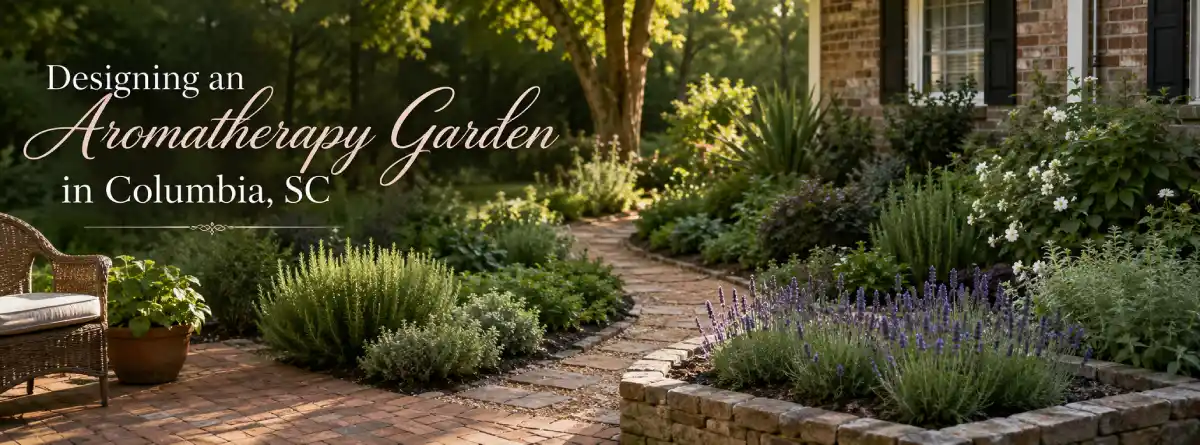
Quick Answer: An aromatherapy garden in Columbia, SC should combine fragrant herbs, flowering shrubs, and scented foliage that suit the yard’s sunlight, drainage, and available space. Place the plants near paths, patios, and seating areas where brushing leaves or catching a breeze releases their fragrance naturally.
A fragrant garden can make an ordinary outdoor area feel more personal and inviting. The goal is not to crowd the yard with every scented plant available, but to choose a manageable mix that performs well in Columbia’s heat and humidity. A thoughtful plan from our landscape design services can connect fragrance, shade, movement, and seasonal interest without creating a high-maintenance planting bed.
Choose Fragrance for Different Parts of the Garden
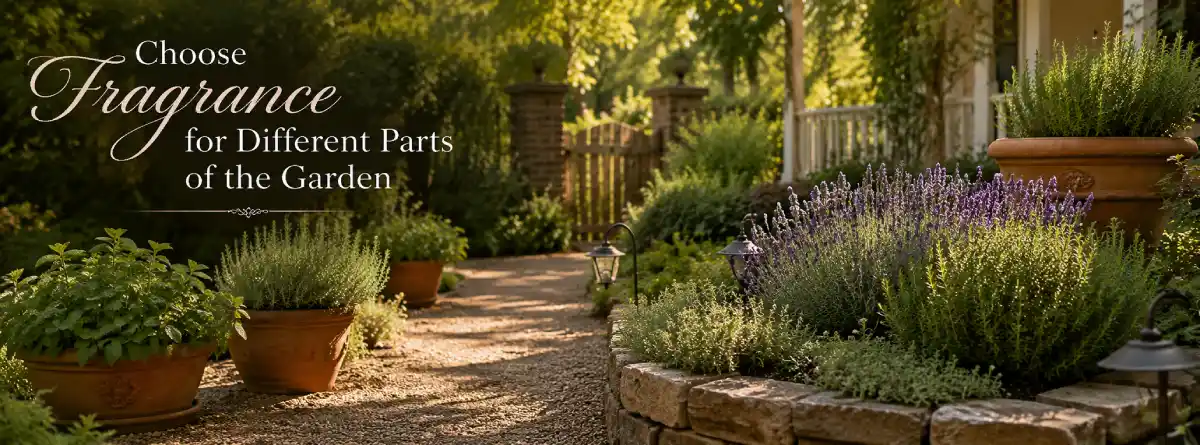
Use low aromatic herbs such as thyme and rosemary beside sunny walkways, where their foliage can be touched without blocking the path. Place stronger scents, including gardenia or star jasmine, near a patio or window but not so close that the fragrance becomes overwhelming. Mint and lemon balm are useful in containers because they can spread aggressively in open soil.
Match Each Plant to Sunlight and Drainage
Plant selection should begin with the site, not the fragrance. Rosemary, thyme, and lavender need strong sunlight and fast-draining soil. Lavender can be difficult in humid weather or heavy clay, so a raised bed, gravelly soil, and good airflow may give it a better chance. Gardenia prefers acidic soil, steady moisture, and some protection from harsh afternoon conditions.
Include South Carolina Native Fragrance
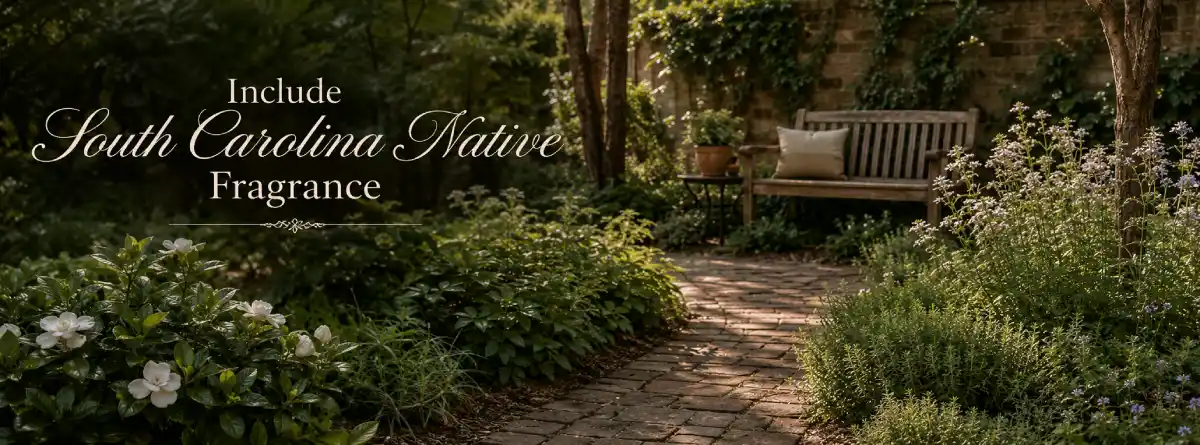
Native plants can add scent while supporting a garden that feels connected to the region. Carolina sweetshrub has aromatic flowers and foliage, while mountain mint offers a strong herbal scent and can support pollinators. A sustainable native plant design should still account for mature size, moisture, light, and how each plant fits the overall layout.
Why This Matters
Aromatherapy garden design is most successful when fragrance becomes part of everyday outdoor use. Scented plants near a porch step, kitchen door, garden bench, or frequently used walkway are more likely to be noticed than plants hidden in a distant corner. The garden can also provide herbs for household use when those plants are safely identified and grown as part of an edible landscape.
Common Mistakes
- Choosing plants for fragrance without checking sunlight, drainage, or mature size.
- Planting mint, lemon balm, or other spreading herbs directly into a small bed.
- Combining too many powerful scents around one seating area.
Best Practices
- Group plants by similar water, light, and soil needs.
- Use containers or edging to control aggressive herbs.
- Plan for fragrance in different seasons instead of relying on one short bloom period.
Local Relevance
Columbia and Lexington gardens must handle hot summers, humid nights, sudden rain, and periods of dry weather. Raised beds, thoughtful grading, mulch that does not bury plant crowns, and morning irrigation can help reduce stress. Homeowners near Irmo, Lake Murray, Northeast Columbia, and Elgin should also consider deer pressure, shade patterns, and differences between sandy, loamy, and clay-heavy soil.
When to Contact a Professional
Professional help is useful when the garden needs drainage corrections, a new planting layout, irrigation changes, or a balanced mix of herbs, shrubs, native plants, and seating areas. It is also wise to discuss allergies, pets, children, and any plans to harvest leaves or flowers. Fragrant plants can enhance outdoor enjoyment, but they should not be treated as a substitute for medical care.
Final Thoughts
A well-designed aromatherapy garden uses scent with restraint and places each plant where it can grow successfully. Start with the areas you use most, choose plants that fit the site, and build the garden in manageable stages. To plan a fragrant landscape for your Columbia or Lexington property, contact Front Yard Forest for practical design and installation guidance.
Frequently Asked Questions
What plants work well in an aromatherapy garden in Columbia, SC?
Rosemary, thyme, basil, gardenia, Carolina sweetshrub, mountain mint, and container-grown mint can work well when matched to the site’s light, soil, and drainage.
Can lavender grow in Columbia, South Carolina?
Lavender can grow in Columbia, but heat, humidity, and clay soil can shorten its life. Full sun, excellent drainage, airflow, and a raised planting area may improve its chances.
Where should fragrant plants be placed?
Place fragrant plants near walkways, patios, porches, windows, and seating areas where their scent can be noticed. Keep stronger fragrances far enough apart that they do not compete.
Can an aromatherapy garden also support pollinators?
Yes. Fragrant native plants such as mountain mint and other regionally appropriate flowering plants may provide nectar, shelter, and seasonal interest for pollinators.
Does a fragrant garden require a lot of maintenance?
Maintenance depends on the plant mix and site. Most gardens need establishment watering, seasonal pruning, weed control, mulch management, and occasional control of spreading herbs.