Landscaping That Works in South Carolina
Jun 01, 2026Landscaping for South Carolina’s Climate
Quick Answer: The best landscaping for South Carolina’s climate uses plants, materials, and layouts that can handle heat, humidity, heavy rain, dry stretches, and changing soil conditions. For many Columbia and Lexington yards, that means choosing site-appropriate native plants, improving water movement, reducing high-maintenance turf where it makes sense, and designing around the property's actual sun, shade, slope, and soil.
South Carolina yards can be beautiful, but they are not always easy. A plant that looks good at the garden center may struggle once it faces July heat, compacted clay, poor drainage, or a dry slope near the driveway. Good sustainable landscape design starts by matching the yard to the climate rather than forcing it to behave like a different region.
Start With Plants That Fit the Site
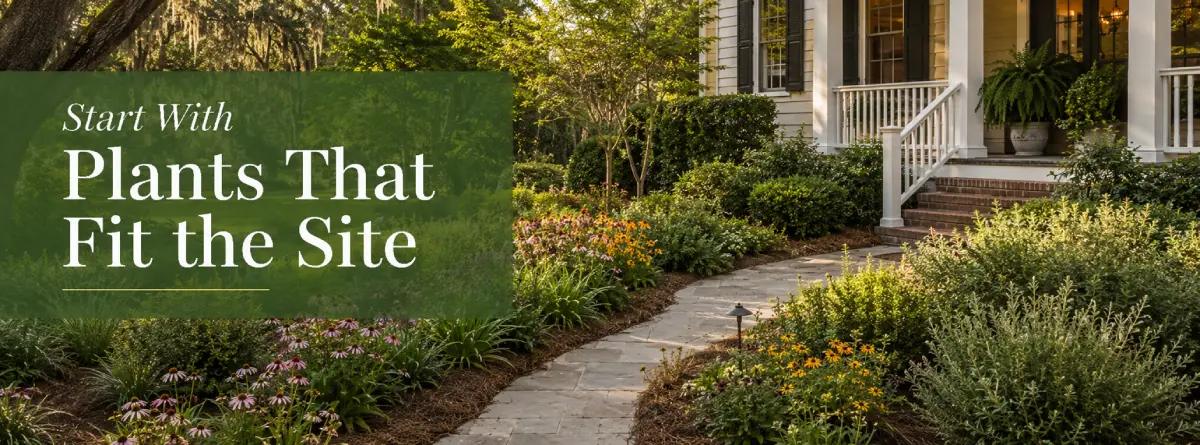
Plant choice matters, but placement matters just as much. A sunny slope, a shaded foundation bed, a damp low spot, and a compacted roadside strip may all require different solutions. For many homeowners, native plant landscaping can be a strong starting point because native and regionally adapted plants are often better suited to local weather patterns, wildlife, and seasonal changes.
That does not mean every native plant belongs in every yard. Sunlight, drainage, mature size, soil moisture, and the look you want should guide the final choice. A thoughtful design uses plants where they have a good chance to settle in, grow naturally, and support the yard over time.
Plan for Heat, Humidity, and Heavy Rain
In Columbia, Lexington, Irmo, Lake Murray, and nearby areas, landscaping has to deal with both heat stress and stormwater. A yard may be dry for days, then suddenly receive heavy rainfall that runs across compacted soil. Mulch, plant spacing, grading, rain garden areas, and smart drainage decisions can help the landscape handle those swings more gracefully.
Homeowners dealing with runoff, soggy beds, erosion, or plants that decline after storms may need more than new plants. They may need better water movement. Front Yard Forest can help with water conservation solutions that consider soil, slope, mulch, planting zones, and practical watering habits.
Reduce Turf Where Grass Fights the Yard
Traditional grass lawns can work in some areas, but they are not always the best answer for shade, slopes, wet spots, dry corners, or areas that are difficult to mow. In those spaces, homeowners may benefit from groundcovers, planted beds, meadow-style areas, mulch paths, or other eco-friendly lawn alternatives that fit the way the yard is actually used.
The goal is not always to remove all grass. Sometimes the best design keeps a useful lawn area while replacing problem spots with plantings that require less mowing and better match the site.
Why This Matters
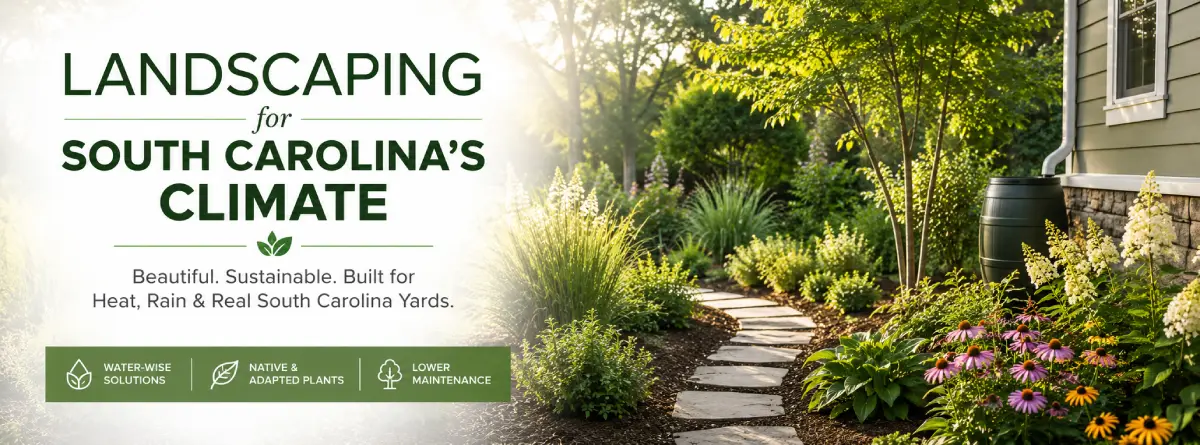
A climate-aware landscape can be easier to care for once established, more comfortable to live with, and better suited to local conditions. It can also support pollinators, reduce wasted water, soften hard edges around the home, and make the yard feel more connected to the South Carolina landscape.
Common Mistakes
- Choosing plants based only on appearance without checking sun, soil, mature size, or drainage needs.
- Planting too densely, which can lead to crowding, poor airflow, and extra maintenance later.
- Ignoring runoff, compacted soil, and low spots before installing new plants.
- Trying to keep grass in areas where shade, slope, or moisture make turf difficult to maintain.
Best Practices
- Group plants by similar sunlight and water needs so each area is easier to manage.
- Use mulch thoughtfully to help moderate soil temperature, protect roots, and reduce exposed soil.
- Choose plants for mature size, not just how they look in a small nursery container.
- Leave room for access, maintenance, walking paths, and seasonal growth.
Local Relevance
Yards across Columbia, Lexington, Northeast Columbia, Elgin, and the Lake Murray area can vary widely. Some properties have heavy clay, some have sandy pockets, and some have mixed conditions within the same yard. A good landscape plan should respond to the actual site instead of relying on one plant list or one design style for every home.
When to Contact a Professional
It may be time to ask for help if plants keep failing, water collects near beds, the lawn is difficult to maintain, or the yard feels disconnected from how you want to use it. A professional can evaluate sun, shade, slope, soil, water movement, and long-term maintenance before recommending a design.
Final Thoughts
Landscaping for South Carolina’s climate works best when the yard is treated as a living system. With the right mix of plants, water planning, mulch, lawn alternatives, and practical design, homeowners can create outdoor spaces that look good and make sense for local conditions. To plan a yard that fits your property, schedule a landscaping consultation with Front Yard Forest.