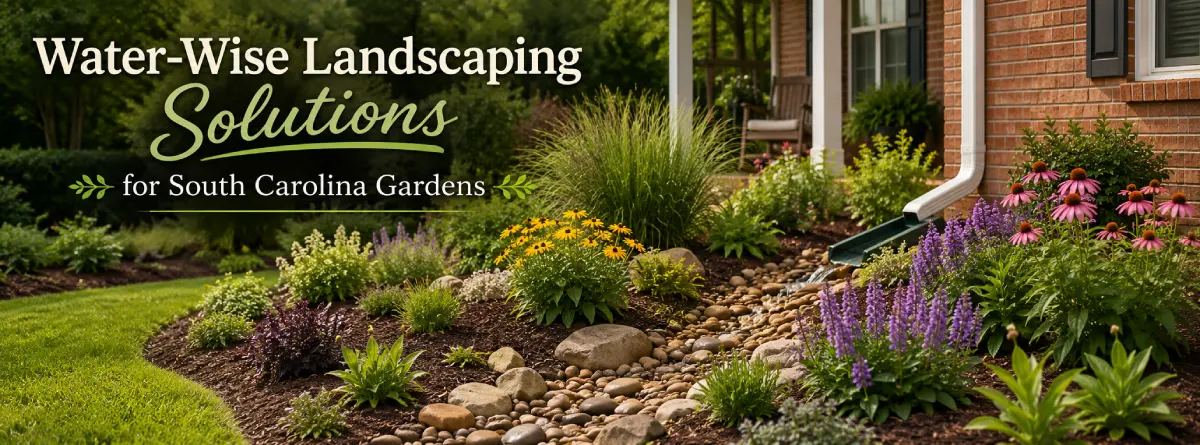
Water-Wise Landscaping Solutions for South Carolina Gardens
Jul 01, 2026Water-Wise Landscaping for South Carolina Gardens
Quick Answer: Water-wise landscaping in South Carolina combines plants suited to the site with healthier soil, dependable mulch, thoughtful drainage, and effective watering. The goal is not a dry-looking yard; it is a landscape that uses rainfall well, avoids unnecessary irrigation, and stays attractive through heat and changing weather.
Gardens around Columbia, Lexington, Irmo, and Lake Murray regularly face long, hot periods followed by heavy rain. A successful plan needs to address both conditions rather than depending solely on frequent watering. Front Yard Forest uses practical water conservation solutions that consider the yard's light, slope, soil, drainage, and how the homeowner actually uses the space.
Start With the Site Before Choosing Plants
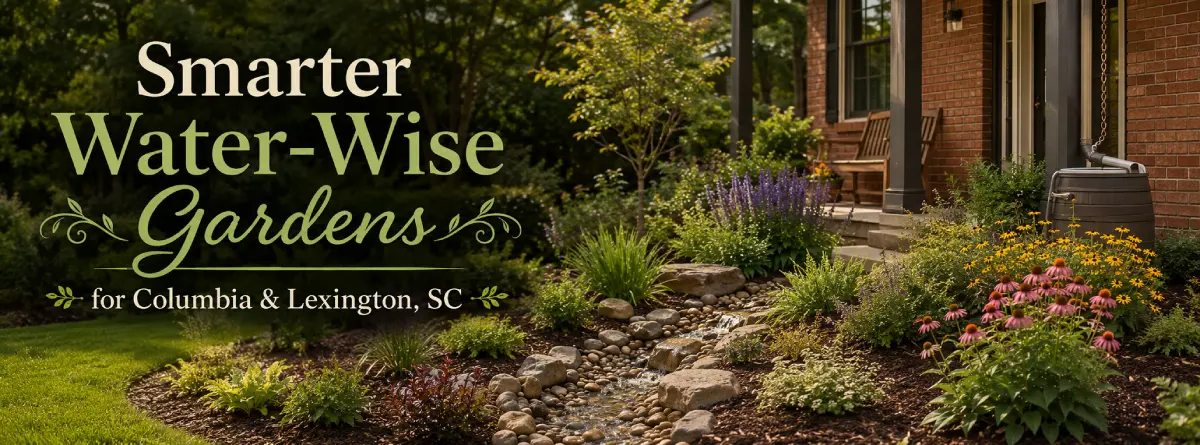
A water-wise garden begins with observation. Areas near downspouts, low spots, compacted soil, full-sun beds, and shaded foundations all behave differently after rain. Before selecting plants, note where water collects, where soil dries quickly, and where runoff leaves the property. These details help determine whether the yard needs improved grading, a rain garden, deeper soil preparation, or simply a better planting layout.
Choose Plants That Match Sun, Soil, and Moisture
Plant selection has a major effect on water use. Plants placed in the wrong light or moisture conditions may need constant attention, even when they are considered drought-tolerant. Well-planned native plants for South Carolina yards can be a strong choice, but each plant still needs suitable drainage, mature spacing, and sun exposure. Grouping plants with similar moisture needs also makes watering more efficient.
Improve the Soil Surface
Bare, compacted soil loses moisture quickly and can shed water during hard rain. Organic matter can improve some soils, while a consistent mulch layer helps shade the soil, slow evaporation, and reduce splash around plants. Mulch should not be piled against trunks or stems. The right depth and placement matter more than creating a thick decorative mound.
Capture Rain Without Creating Standing Water
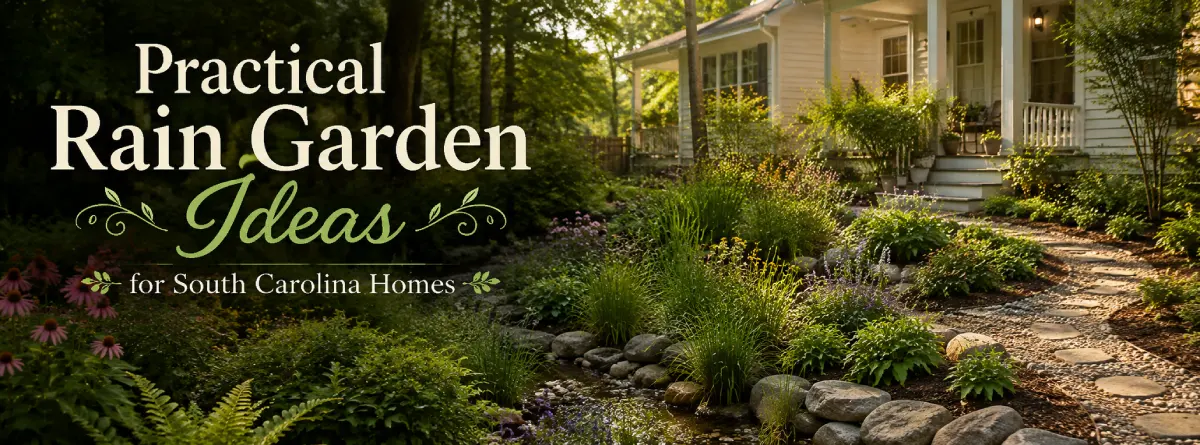
Rain gardens, shallow planted basins, downspout routing, and carefully shaped beds can slow runoff and give water more time to soak into the ground. These features must be located and sized for the site. A low area that stays wet for days may need drainage correction rather than more plants, especially near foundations, septic areas, walkways, or property lines.
Why This Matters
Water-wise landscaping helps a yard respond more naturally to South Carolina weather. Better plant placement, soil coverage, and rainfall management can reduce avoidable watering while supporting healthier roots and more stable garden beds. It can also make maintenance planning easier because each area has a clear purpose and watering needs.
Common Mistakes
- Watering every bed on the same schedule regardless of shade, soil, or plant needs.
- Choosing plants by appearance without checking mature size, drainage, and sun exposure.
- Directing downspouts into low areas without considering overflow or nearby structures.
Best Practices
- Water deeply when needed rather than applying a small amount every day.
- Inspect soil below the surface before assuming plants need more irrigation.
- Use mulch, plant groupings, and seasonal adjustments to limit unnecessary water loss.
Local Relevance
Columbia and Lexington landscapes may include heavy clay, sandy fill, compacted construction soil, steep slopes, or mixed conditions within one property. Summer heat can quickly dry exposed beds, while thunderstorms may create runoff before water penetrates the soil. In Northeast Columbia, Elgin, Irmo, and Lake Murray communities, the best solution depends on the individual lot rather than a single irrigation rule.
When to Contact a Professional
Professional help is useful when runoff crosses walkways, water gathers near the house, irrigation costs keep rising, or plants repeatedly fail in the same areas. A site-based plan can integrate drainage, planting, soil preparation, and maintenance rather than treating each issue separately. Front Yard Forest offers sustainable landscape design for homeowners who want a practical layout suited to their property.
Final Thoughts
A water-wise yard does not depend on one special plant or product. It comes from fitting the design to the land, using water at the right time, and allowing rainfall to work for the landscape instead of running away from it. Homeowners ready to improve an existing yard or plan a new garden can schedule a landscaping consultation with Front Yard Forest.
Frequently Asked Questions
What makes a landscape water-wise in South Carolina?
A water-wise landscape matches plants and irrigation to the site's sunlight, soil, slope, and drainage. It also uses mulch, rainfall management, and seasonal watering adjustments to reduce avoidable water use.
How often should a newly planted South Carolina garden be watered?
New plants usually need closer monitoring while roots establish, but the schedule depends on weather, soil, plant type, and drainage. Check moisture below the mulch rather than watering automatically every day.
Are native plants always drought tolerant?
No. Native plants have different moisture, light, and soil requirements. A native plant placed in the wrong conditions may struggle, while a well-matched plant can become easier to maintain once established.
Can a rain garden fix every standing-water problem?
No. Rain gardens can help manage runoff in suitable locations, but persistent standing water may indicate compaction, grading, drainage, or overflow problems that require a broader site assessment.
What type of mulch works best for water conservation?
Organic mulch such as shredded bark, arborist wood chips, or pine straw can help shade soil and slow evaporation. The best choice depends on the planting bed, appearance, slope, and maintenance plan.