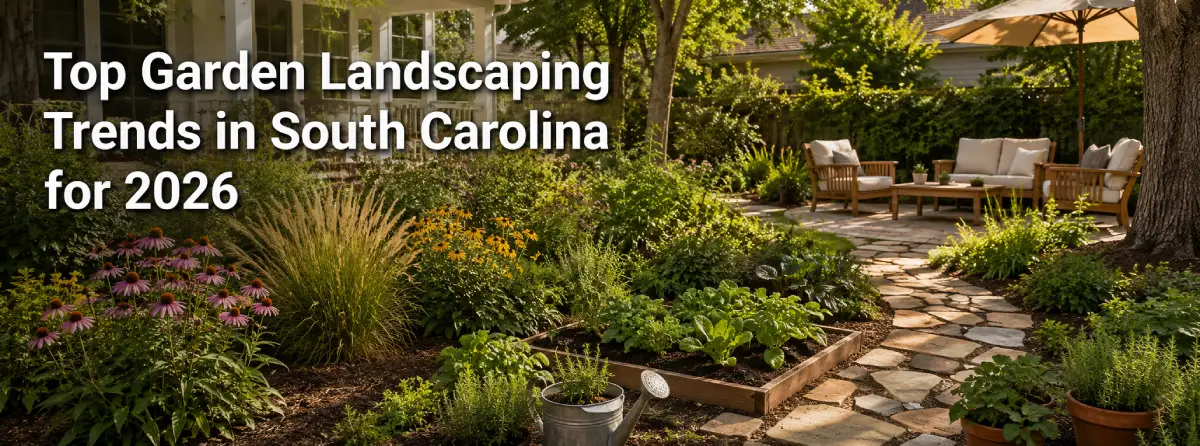
Top Garden Landscaping Trends in South Carolina for 2026
Jun 15, 2026Top Garden Landscaping Trends in SC for 2026
Quick Answer: The top garden landscaping trends in South Carolina for 2026 are practical, lower-maintenance, and more connected to the way people actually use their yards. Native plants, reduced turf, water-wise design, edible landscaping, pollinator-friendly gardens, and shaded outdoor areas are increasingly popular choices for homeowners in Columbia, Lexington, and nearby communities.
For many homeowners, the goal is no longer a yard that only looks neat from the road. People want outdoor areas that feel useful, seasonal, comfortable, and easier to care for in South Carolina's heat and humidity. That is why 2026 garden planning is moving toward sustainable landscape design that works with the site instead of fighting it every weekend.
Native Plants Are Becoming a Smarter Starting Point
One of the strongest shifts is the move toward plants that are better suited to local soil, rainfall, heat, and wildlife. A native garden still needs planning, but the right plant in the right place can often settle in better than a high-maintenance ornamental that struggles through summer. Homeowners interested in native plant landscaping should think about sunlight, drainage, mature size, bloom timing, and how the yard should look through more than one season.
Less Lawn, More Useful Garden Area
Traditional turf still has a place, especially where kids, pets, or foot traffic need open space. The trend is not always about removing every blade of grass. It is more about reducing unused lawn areas and replacing them with planting beds, clover where appropriate, groundcovers, pathways, mulch, or eco-friendly lawn alternatives that better fit the yard’s conditions.
Water-Wise Design Is More Practical Than Trendy
Columbia and Lexington yards can deal with heavy rain, dry spells, compacted soil, runoff, and summer stress in the same year. Water-wise landscaping looks at how water moves across the property before plants are installed. Rain gardens, better soil preparation, mulch, grading awareness, and water conservation solutions can help a yard handle moisture more thoughtfully.
Edible Landscaping Is Moving Beyond Backyard Vegetable Rows
Food gardens are becoming further integrated into the overall landscape. Instead of hiding herbs, fruiting shrubs, and small edible beds behind the house, homeowners are placing productive plants where they make sense for sunlight, access, drainage, and appearance. The best edible landscapes feel natural, not forced, and they are planned around realistic harvest goals and seasonal care.
Why This Matters
These trends matter because they make yards more personal and more functional. A well-planned garden can support pollinators, reduce wasted lawn space, improve comfort, and make maintenance more manageable over time. In South Carolina, the best results usually come from fitting the design to the property instead of copying a picture from another climate.
Common Mistakes
- Choosing plants because they look good online without checking sunlight, soil, moisture, and mature size.
- Removing too much lawn at once without a clear plan for paths, borders, access, and maintenance.
- Ignoring drainage issues before adding new beds, mulch, or hardscape features.
- Planting edible landscapes where harvest, water access, and regular care will be inconvenient.
Best Practices
- Start with the areas of the yard that cause the most work, water use, or annoyance.
- Use layered planting with shrubs, perennials, grasses, and groundcovers when conditions allow.
- Group plants with similar water and sunlight needs together.
- Keep some open space where it serves a real purpose.
- Plan for establishment care, especially during the first growing season.
Local Relevance
Yards near Lake Murray, Irmo, Elgin, Northeast Columbia, Lexington, and Columbia can have very different conditions even when they are only a few miles apart. One property may have sandy, fast-draining soil, while another may hold water after storms. That is why local observation matters before choosing plants, lawn alternatives, rain garden locations, or edible plantings.
When to Contact a Professional
It makes sense to get help when the yard has drainage concerns, large turf areas to replace, confusing sun and shade patterns, or several goals competing for the same space. A professional can help integrate native plants, outdoor living areas, edible plants, and maintenance expectations into a single plan rather than treating each idea separately.
Final Thoughts
The best 2026 garden landscaping trends are not about chasing a look. They are about building a yard that fits the home, the climate, and the people using it. If you are ready to rethink part of your yard in Columbia, Lexington, or a nearby community, schedule a landscaping consultation with Front Yard Forest.