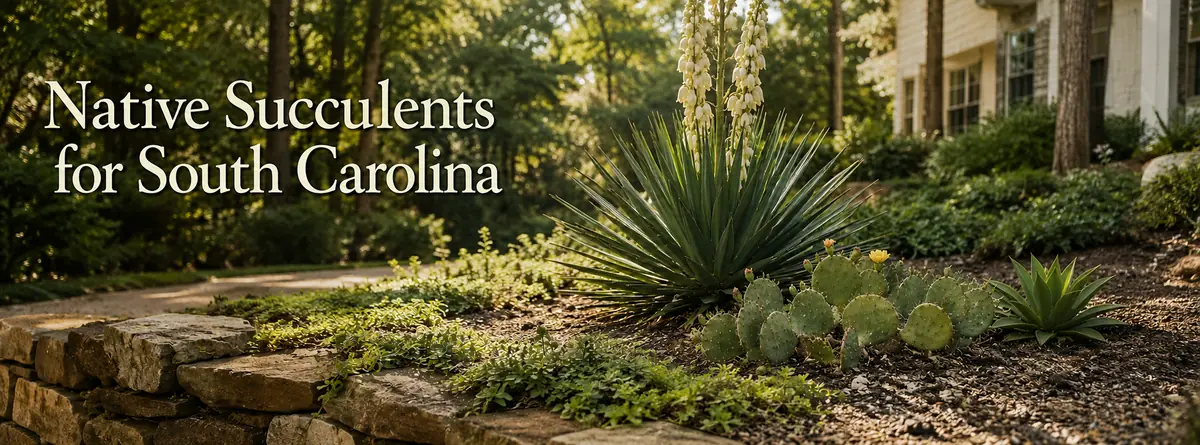
Top Native Succulents for Drought-Tolerant SC Landscapes
Aug 15, 2026Top Native Succulents for Drought-Tolerant SC Landscapes
Quick Answer: Top native succulents for South Carolina are eastern prickly pear, Adam's needle, woodland stonecrop, and eastern agave. To help them thrive, make sure each plant matches your yard’s sunlight, drainage, soil, and available space.
People usually think of succulents as desert plants, but South Carolina has its own native types that store water in their leaves or stems. In places like Columbia and Lexington, heavy clay soil, humidity, and strong rainstorms are just as important as summer heat. To create effective native plant landscaping, it is essential to consider which native succulents are best suited to local conditions, how to address common challenges, and which best practices support long-term success. Good native plant landscaping begins by putting the right plant in the right spot.
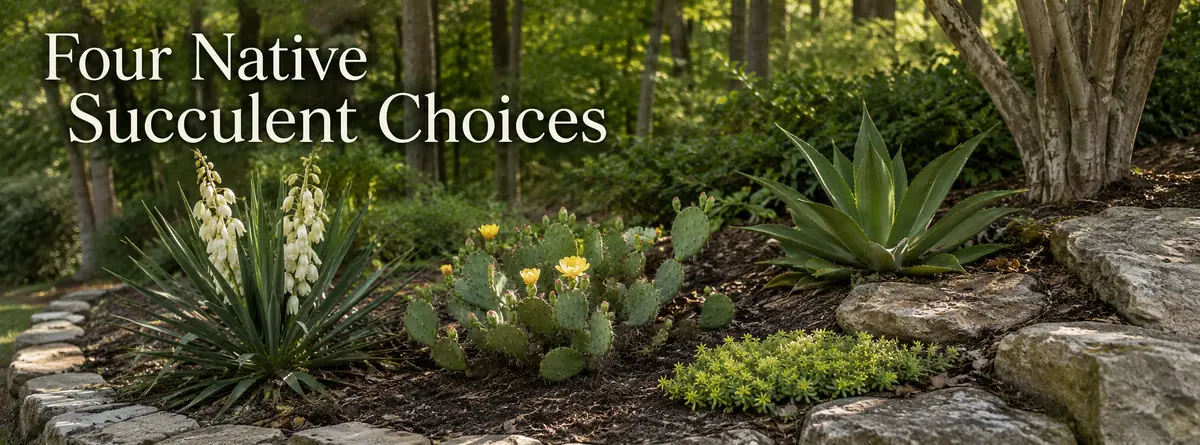
Four Native Succulents Worth Considering
Eastern prickly pear: This low, spreading cactus does well in sunny spots with dry, fast-draining soil. Its flat green pads and yellow flowers give a surprising look for the Midlands. Keep it away from walkways, play areas, and places you maintain often, since its tiny bristles are hard to see and can be uncomfortable if touched.
Adam's needle: This native yucca grows as a bold evergreen rosette and sends up tall stalks with creamy white flowers. Once established, it handles heat and drought, but still needs well-drained soil. Because it gets large and has pointed leaves, it’s best for wide beds, banks, or as a focal point, not right next to a doorway.
Woodland stonecrop: Not all drought-tolerant succulents like full sun. This low native sedum prefers well-drained spots with some shade and can slowly spread around rocks or under open trees. Its small white flowers in spring add interest without making the area look crowded.
Eastern agave or false aloe: This rare native perennial grows as a low rosette of soft, fleshy leaves and sends up a tall flower stalk in summer. It prefers sandy or rocky soil with excellent drainage. Because it is less common than other succulents, search for its botanical name, Agave virginica, when shopping. Avoid planting it in areas where water accumulates after storms, as persistent wet soil can be more harmful than occasional dry periods. Monitor how quickly water drains from the site, and consider factors such as grading, soil type, and runoff. Front Yard Forest's water conservation solutions can help connect plant selection with how water moves through your yard.
Use Native Succulents as Part of a Larger Planting
Native succulents usually look best when grouped with grasses, flowering perennials, or groundcovers that need similar conditions. Adam’s needle and eastern prickly pear add structure, while seasonal flowers soften the look. Their blooms can also help pollinators, especially if your yard has gardens for birds and butterflies.
Why This Matters
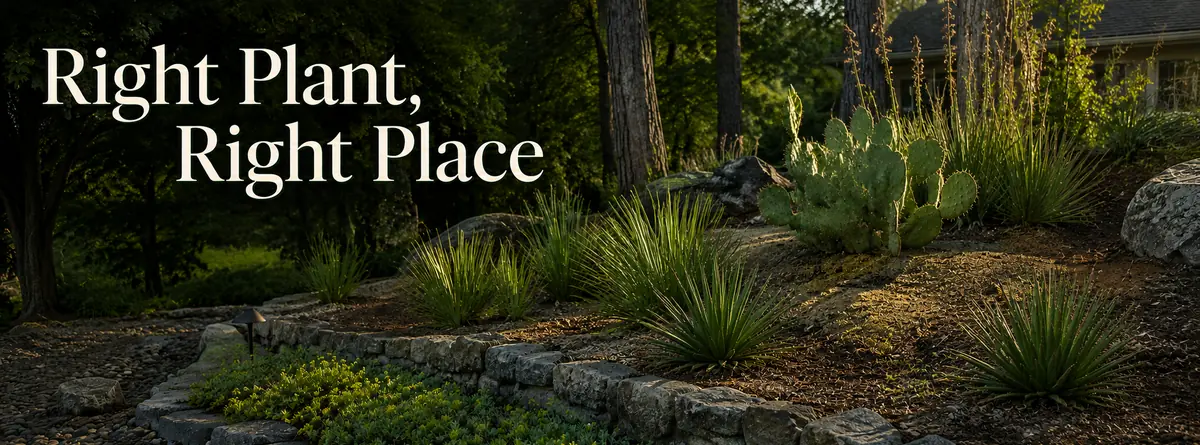
In the Midlands, plants might get a hot August afternoon and then heavy rain soon after. Native succulents add great texture, but they’ll only do well long-term if you pay attention to drainage, spacing, and where you plant them.
Common Mistakes
- Assuming every succulent sold locally is native to South Carolina.
- Planting drought-tolerant species in compacted clay or a low, wet area.
- Putting prickly pear or sharp yucca leaves beside busy paths and play spaces.
- Treating woodland stonecrop like a desert plant and placing it in reflected afternoon heat.
Best Practices
- Confirm the botanical name before buying a plant labeled only as cactus, yucca, sedum, or agave.
- Match each plant to the site's sun, drainage, soil, mature size, and foot traffic.
- Water new plants while roots establish, then adjust irrigation to weather and soil conditions.
- Leave enough room for mature growth and safe maintenance access.
Local Relevance
Conditions are different in Columbia, Lexington, Irmo, Lake Murray, Northeast Columbia, and Elgin. One yard might have clay and lots of sun, while another has sandy soil, shade, or water from a roof. A plant list is just a starting point—make sure your final choices fit your specific spot.
When to Contact a Professional
It’s a good idea to get professional help if you’re not sure about drainage, your planting bed is on a slope, or you need to fit plants around walkways, kids, pets, or irrigation. You can schedule a landscaping consultation to talk about choosing, placing, and installing native plants.
Final Thoughts
Eastern prickly pear adds flowers and low structure, Adam’s needle gives an evergreen accent, woodland stonecrop works well on cooler edges, and eastern agave offers a softer rosette. Make sure each plant gets the drainage, light, and space it needs to thrive in your drought-tolerant landscape.
Frequently Asked Questions
What succulents are native to South Carolina?
Native choices include eastern prickly pear, Adam's needle, woodland stonecrop, and eastern agave, also called false aloe. Availability and natural distribution vary by region, so confirm the botanical name and match it to the planting site.
Can native succulents grow in South Carolina clay soil?
Some may tolerate clay if the site drains well, but compacted or waterlogged clay can cause problems. Observe drainage after rain and correct the site before planting if water lingers.
Do drought-tolerant succulents need watering after planting?
Yes. Newly installed plants need enough water to establish roots. Once established, watering frequency should reflect rainfall, soil, exposure, and the needs of the individual species.
Is woodland stonecrop suitable for full sun?
Woodland stonecrop can take some sun, but it is naturally better suited to a well-drained site with partial shade. It may need more moisture when exposed to stronger sun.
Where should prickly pear and yucca be planted?
Place them in sunny, well-drained areas with room to mature. Keep prickly pear bristles and sharp yucca leaves away from busy paths, entrances, play spaces, and routine maintenance routes.