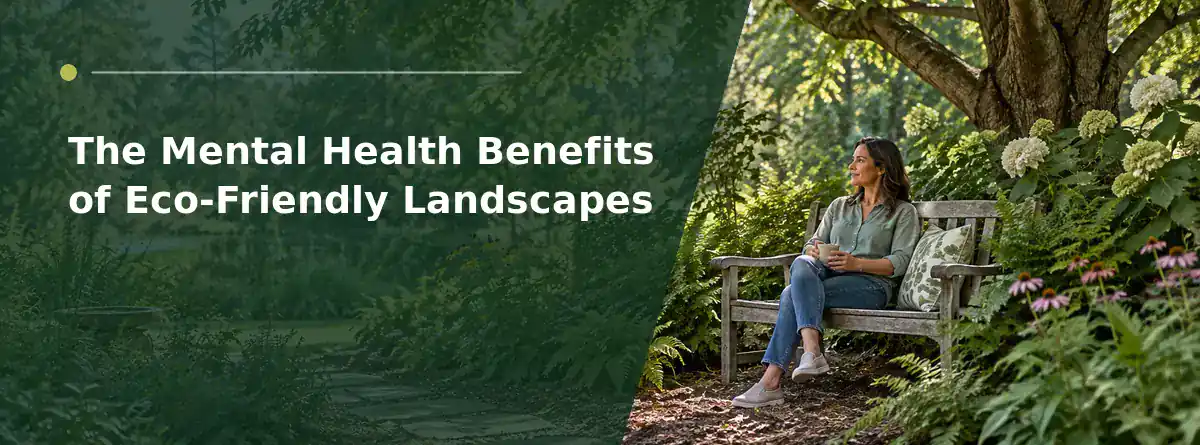
The Mental Health Benefits of Eco-Friendly Landscapes
Oct 15, 2026Why a Thoughtful Yard Can Feel Better to Live With
A landscape does more than frame a house. It affects what people see from the windows, how easily they step outside, and whether the space seems inviting or neglected. When an outdoor area is planned around the way a household actually lives, it can become a quiet place to reset during a busy day.
That does not mean a garden can solve every mental-health concern. It does mean that a comfortable, living landscape may support healthier routines by making it easier to spend a few minutes outdoors, notice seasonal change, or complete a simple hands-on task. The mental health benefits of eco-friendly landscapes often begin with those small, repeatable moments.
Nature at Home Creates More Opportunities to Pause
People do not always need a large retreat or a long drive to experience a change of pace. A shaded sitting area, a planting bed outside the kitchen, or a short path through native plants can create a natural reason to step away from screens and indoor noise.
Plants also bring movement and change to a familiar view. Leaves emerge, flowers open, birds visit, and seed heads remain after the growing season. These details give homeowners something real to observe without requiring a formal activity. For someone who spends most of the day indoors, that small visual connection can make the home feel more rejuvenating.
Designing for Calm at Home
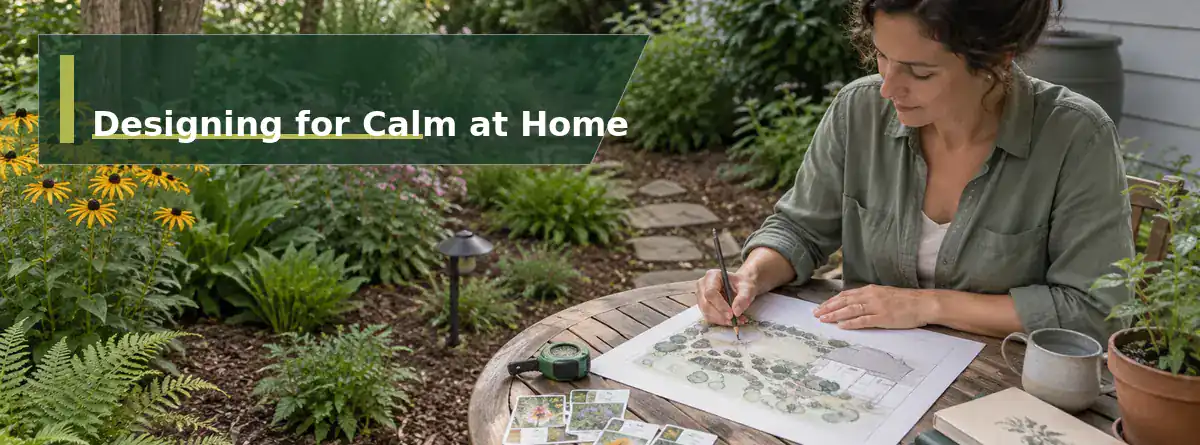
A calming landscape does not have to be elaborate. Start by considering where the yard already feels pleasant and where it creates friction. Is there a hot area with no shade, a soggy corner that stays unused, or a view that feels harsh from the most-used room in the house? Solving one of those problems may do more for daily enjoyment than adding plants without a plan.
Color, texture, sound, and scent can shape the experience, too. Layered foliage may feel softer than a large expanse of turf. Grasses can add gentle movement. Fragrant herbs or seasonal flowers can make a short walk more noticeable. The best choices depend on sunlight, soil, drainage, mature plant size, and the homeowner’s preferences.
Front Yard Forest’s landscape design services can help connect those practical conditions with the way a family wants to use its outdoor space.
Eco-Friendly Choices Can Reduce Everyday Friction
Sustainable landscaping is not only about green objectives. It can also make the yard easier to understand and manage. Right-sized plants, appropriate ground covers, sensible mulch, and better water planning may reduce the cycle of constant replacement and emergency maintenance.
When a landscape fits its site, homeowners may spend less time fighting the conditions and more time appreciating the result. That might mean selecting plants suited to a dry, sunny slope, creating a more useful shaded area, or replacing a difficult patch of lawn with a planting approach that matches the maintenance the household can realistically provide.
Make Outdoor Time Easier to Use
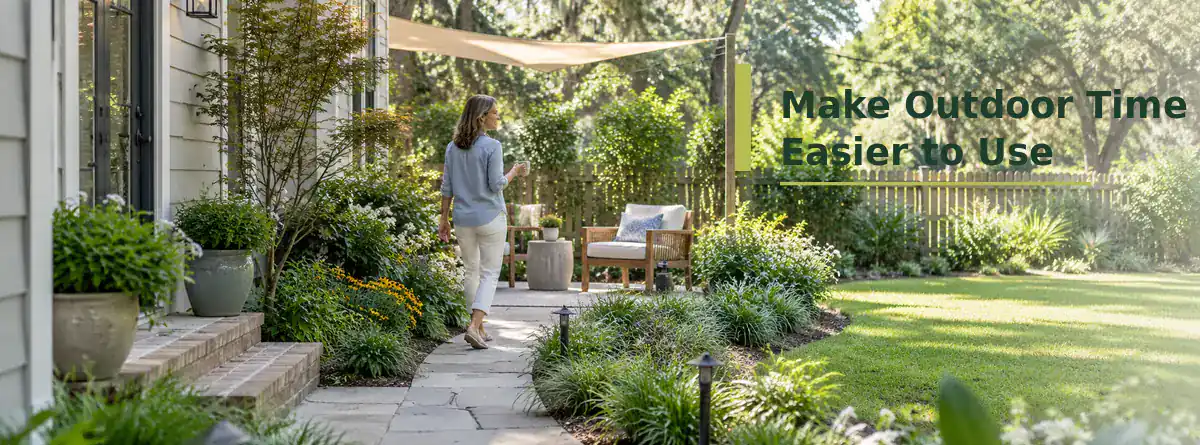
Ease of access and convenience matter to mental health. A space is more likely to be used when the route is clear, the seating is comfortable, and the destination is close enough for a short break. A small table near the back door, a place to water container plants, or a bench facing a garden can turn good intentions into ordinary habits.
Environmentally friendly design can support that usability through shade, water-conscious plantings, and materials that work with the property instead of creating extra trouble. Homeowners exploring eco-friendly lawn alternatives may find that the right replacement creates more room for sitting, walking, gardening, or simply looking outside.
Hands-On Gardening Can Add Meaning to the Week
Not everyone finds gardening relaxing, and a yard should never become another source of pressure. But for people who enjoy hands-on work, a manageable planting area can provide a satisfying rhythm: noticing what needs attention, tending to it, and watching a living system respond over time.
Edible landscapes can add another layer of connection because the work leads to something useful. Herbs, vegetables, or fruiting plants invite people to check on growth and bring part of the garden area into everyday meals. These results depend on light, soil, water, spacing, seasonal care, and realistic expectations, but the process itself can be rewarding.
A food forest or edible landscape does not have to occupy the whole yard. A few productive plants placed where they are easy to see and reach may be enough to make the landscape feel more connected to daily life.
Build a Landscape That Supports Your Actual Routine
The most helpful outdoor space is usually the one a household will genuinely use. Some people want a calm corner for coffee. Others prefer a wildlife-friendly planting bed, a place to walk after dinner, or a low-pressure project that changes with the seasons. No single landscape design supports everyone in the same way.
Begin with one honest question: what would make it easier or more appealing to spend a few minutes outside? The answer may point toward shade, privacy, a better path, more sensory planting, less lawn, or a simpler maintenance plan. From there, the design can be shaped around the site and the people who live with it.
For homeowners in Columbia, Lexington, Irmo, Lake Murray, Elgin, and nearby South Carolina communities, Front Yard Forest can help turn those observations into a practical landscape plan. A yard designed with both ecological and environmental conditions and everyday well-being in mind can become a more comfortable part of home life—one small outdoor moment at a time.