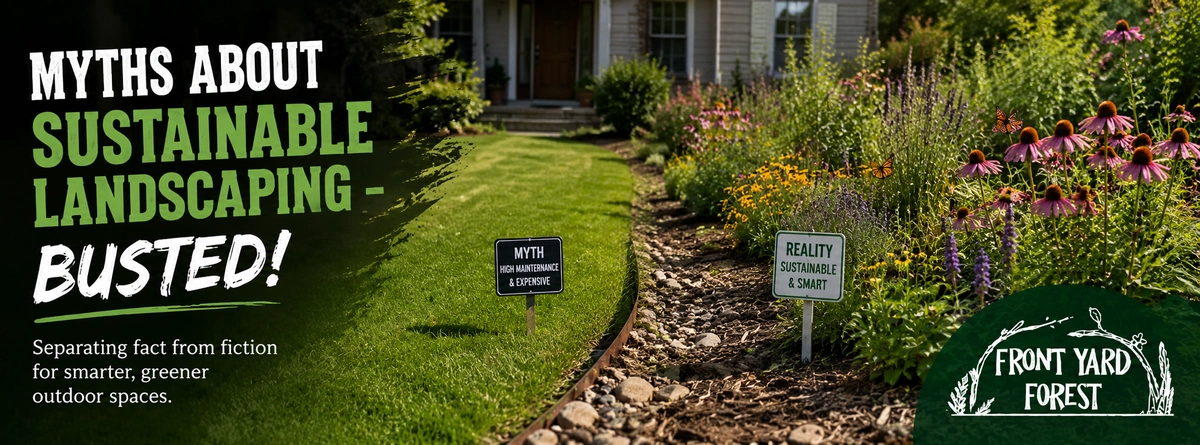
Myths About Sustainable Landscaping – Busted!
Sep 15, 2026Common myths about sustainable landscaping – refuted!
Quick Answer: Sustainable landscaping is not to be confused with allowing a garden to grow wild, replacing all the plants with native ones, or abandoning consideration of its appearance. Instead, a good sustainable landscape is one that is planned with reference to the site, the homeowner's objectives, the way water moves, the way plants are positioned, the maintenance requirements, and how the outdoor area will be used.
The idea of having a more environmentally conscious garden is something that is liked by many people who live in Columbia, Lexington, Irmo, Lake Murray and other nearby areas of South Carolina, such as those communities, but they tend to delay acting on it due to assumptions regarding cost, the amount of maintenance required, appearance, or the types of plants that would have to be used. In reality, sustainable landscaping is not so much about sticking to a single strict formula as it is about making better choices concerning the property. Front Yard Forest carries out sustainable landscape design by viewing the garden as a single, interconnected system rather than treating the plants, the drainage, the lawn areas and the maintenance as separate items.
Sustainable Landscaping Isn’t Just About Plants
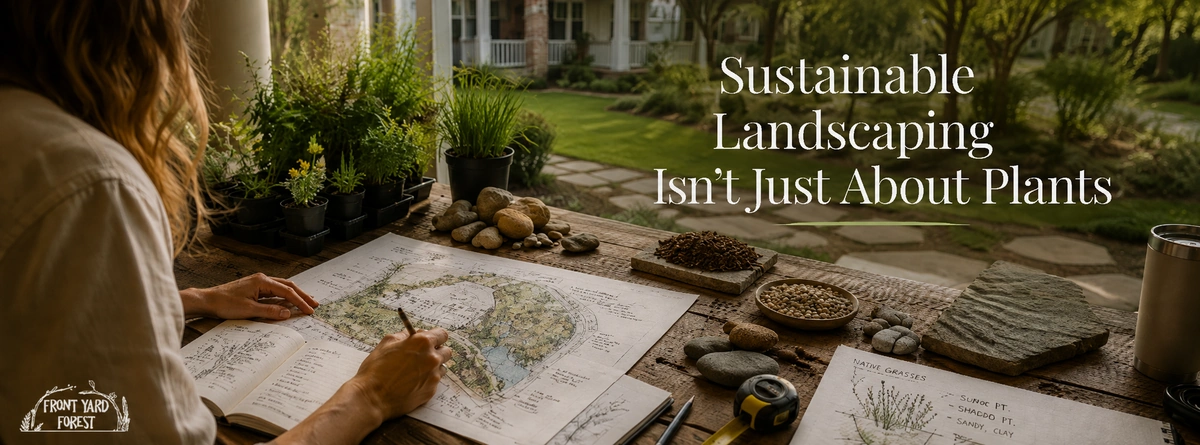
A common misconception is that sustainable landscaping entails selecting environmentally sound plants and then planting them in the ground. While the choice of plants is important, it is only one element of the decision. The amount of sunlight, the condition of the soil, the drainage, the slope, the size of the plants when they reach maturity, the level of foot traffic, the irrigation system, runoff, and the way people move around the yard all influence whether a landscape will function well in the long term.
A section of the garden where water gathers naturally should have a different design from a dry and exposed area of the property. The possibilities for a shady side yard are different from those of a sunny front slope. Considering these conditions at the start can result in more suitable plant placements. This is the reason why native plant landscaping works most effectively when plants are selected according to the real conditions rather than just because they are native to the area.
Myth: A Sustainable Yard Has to Look Wild
The fact that sustainable does not imply unplanned is that a garden can have clearly defined boundaries, paths, intentionally grouped plants, open spaces, points of interest, and a clear connection with the house without at the same time failing to use environmentally sound practices. Although some houseowners prefer a more informal, natural look, others prefer a more structured landscape and in both cases sustainable principles can be included.
Myth: Native Plants Never Need Water or Maintenance
Although native plants are well suited to the conditions in South Carolina, this does not mean that every native plant should be placed in every garden or that newly planted ones can be ignored. Plants which have just been installed usually require care as their root systems become established, and long-term maintenance may still involve pruning, weeding, dividing, mulching, or correcting those that grow beyond the space for which they were intended.
The wrong question to ask is whether a plant requires no maintenance; the right one is whether the plant suits the site and whether the level of care it demands corresponds to what the homeowner desires. A plant that has been carefully selected and placed in the appropriate position might be easier to look after than one that is suffering because it gets too much sun, has poor drainage, or doesn't have enough space.
Myth: Sustainable Landscaping Means Removing Every Lawn
Traditional turf can still be reduced even if it doesn't vanish altogether. There are some homeowners who have grass on their property because they have children, pets, need it for entertaining, or simply because they prefer an open lawn. Sustainable planning should therefore aim at retaining turf only in the areas where it is useful and replace the more difficult sections with planting beds, groundcovers, meadow-style areas, or other eco-friendly lawn alternatives that are appropriate for the site.
A steep bank, a deeply shaded corner, or a narrow strip next to a driveway might not require the same treatment as a level lawn that is mowed every week, and selective turf reduction can be used to keep the practical grass areas while increasing the variety of the landscape.
Myth: Water Conservation Means a Dry-Looking Yard
Water-conscious landscaping isn't just about drought-resistant planting; it can also involve improving how rain moves across a property, selecting plants suited to the right moisture levels, using mulch properly, reducing runoff, and refraining from irrigation when it isn't providing a benefit. In certain gardens, a low spot may be turned into an opportunity for a rain garden or other kind of water conservation solution.
The goal is not to make every part of the property dry. It is to use water more intentionally and match landscape decisions to how the site behaves during both wet and dry periods.
Sustainable Landscaping Still Needs the Right Care
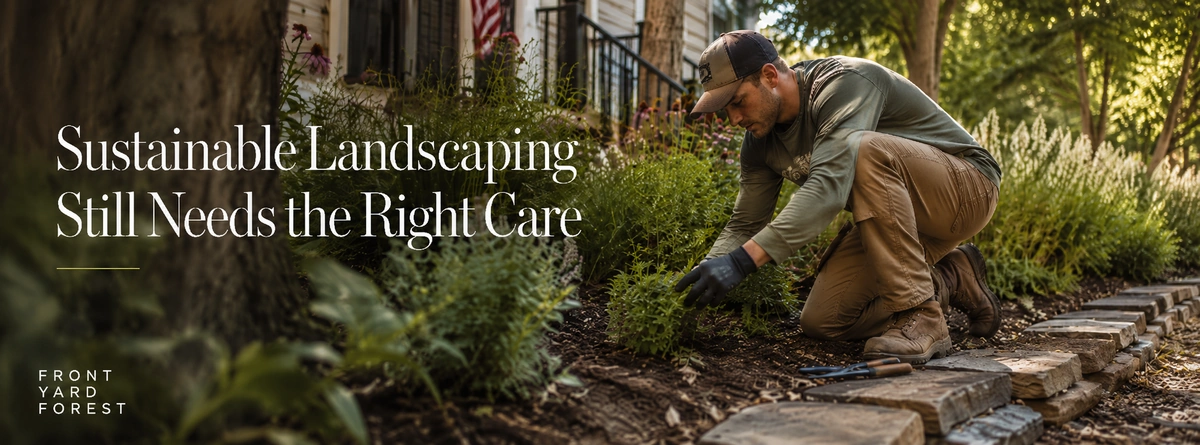
A common misconception is that a sustainable landscape will look after itself. As with any residential landscape, changes take place as plants grow, the weather varies, weeds emerge, the mulch decomposes and the needs of the homeowner change. While sustainable design can help to prevent unnecessary labour, regular observation and some form of selective maintenance are still necessary if the garden is to remain attractive and functional.
Rather than constantly struggling with a plant that is in the wrong place or watering turf which never does well, the landscape should be modified to take account of what the site is indicating. Corrections made gradually over time are generally more reasonable than forcing the property to act as if it were a completely different kind of environment.
Plan the Yard You Actually Want to Live With
Sustainable landscaping isn't about adopting one particular style or going through a set list that all properties have to follow. Instead, one should determine what is most important—whether it be the appearance, the production of food, the provision of habitat for wildlife, having less turf, improved water management, the use of native plants, easier maintenance, or some mix of these—and then plan the landscape in accordance with the property's actual circumstances.
If you are thinking of making any alterations to your yard in Columbia, Lexington, Irmo, Lake Murray, Northeast Columbia, Elgin, or in the surrounding areas, click on the following link to get in touch with Front Yard Forest and ask them to prepare a landscape plan suitable for the site rather than depending on general landscaping myths.
Frequently Asked Questions
Does sustainable landscaping mean getting rid of the entire lawn?
No. Turf can remain where it is useful. Sustainable planning may instead reduce grass in difficult or unnecessary areas and use other plants or groundcovers where they fit better.
Do native plants require watering?
Yes, they can, particularly after installation and during the establishment period. Their long-term watering needs depend on the plant type, soil, sunlight, drainage, rainfall, and site conditions.
Can a sustainable landscape still be neat and well-organized?
Yes, it can; sustainable landscaping may use defined beds, intentional spacing, walkways, edging, focal points, and structured plant groups while also incorporating environmentally considerate practices.
Is sustainable landscaping completely without maintenance?
No, because although sustainable design can reduce the amount of work needed, landscapes change and still require pruning, weeding, mulching, plant adjustments, and other regular maintenance.
Before carrying out a sustainable redesign of a yard, consider the amount of sunlight, soil condition, drainage, slope, water movement, existing plants, how the yard is used, and the level of maintenance you are really capable of carrying out.